
 Why Indigenous Understanding Belongs at the Centre of Newcomer Integration
Activity Brief
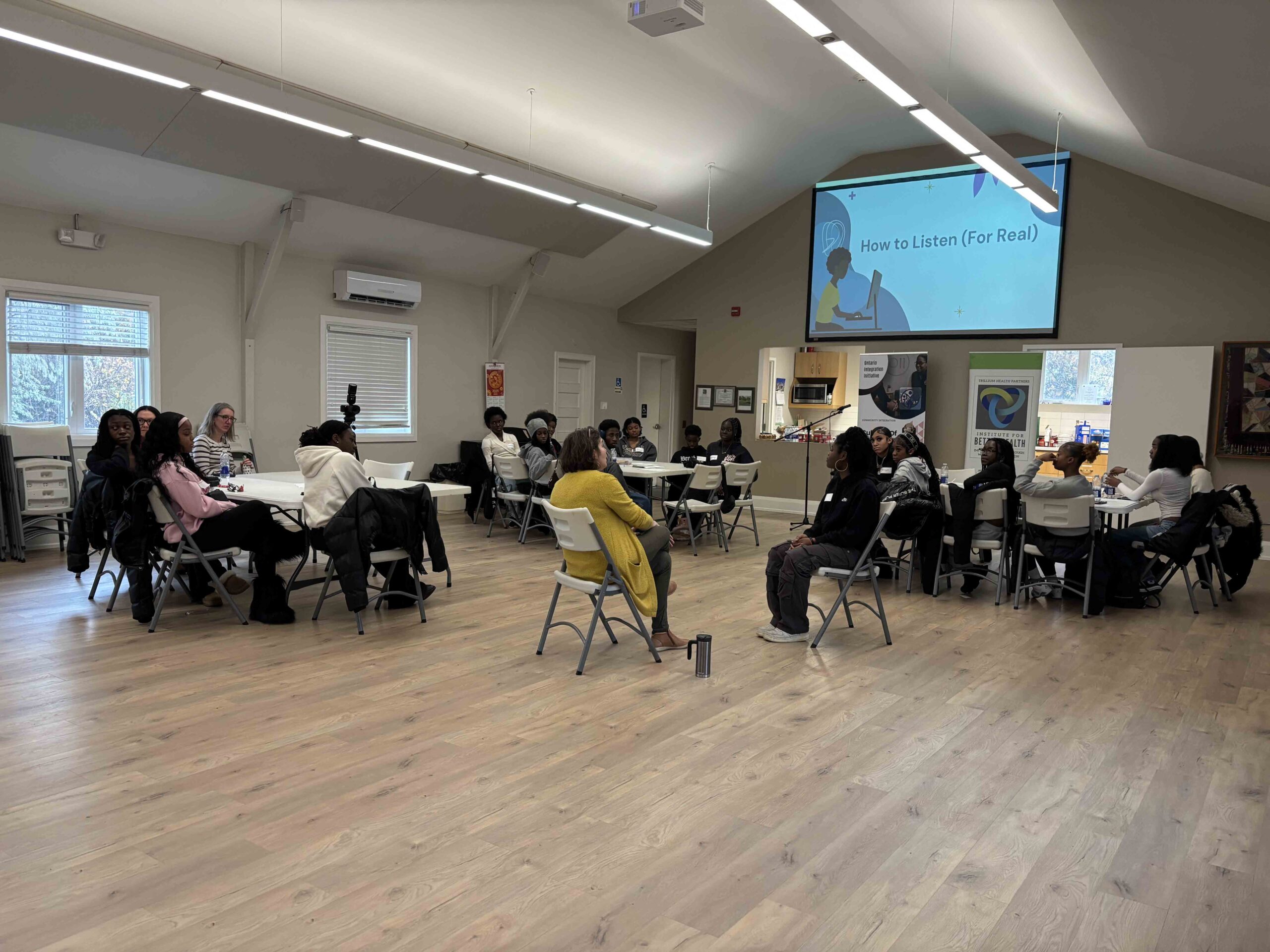
The Art of Listening and Being Heard: BAC YMHP Session 2 report
The November session shifted from primarily educational to experiential and embodied learning, emphasizing applied communication, emotional intelligence, and symbolic expression. It affirmed that listening is not a passive act, it is a radical form of care. 1. Opening and Thematic Framing Youth were welcomed with music, informal networking, and opening remarks introducing the session theme: listening as care, listening as power, listening as healing. The core framing question: “What does it feel like to be unheard-and what could change if you were truly listened to?” 2. Active Listening Training Facilitators led a focused micro-curriculum on listening skills using: Body language and presence Curiosity and inquiry Reflective listening Open-ended questioning The “broken-record” technique for boundary-setting This phase introduced communication as both a clinical skill and a community tool-essential in mental wellness, conflict management, and peer support. 3. Wellness Integration The inclusion of a shared meal and stretching break reinforced: The link between nutrition and mental health The social dimensions of healing Informal peer bonding as therapeutic value 4. Creative Co-Design & Expression Youth were invited into arts-based reflection, storytelling, and performance through visual and dramatic exercises, including: Drawing and poster creation Video role-play and dramatization Symbolic visuals Narrative storytelling Short performance scenes The core creative prompt: “Show us what it looks like when you are heard - or not heard.” Youth created artwork, scripts, and filmed content depicting: School stress Emotional isolation Family conflict Bullying Mental health stigma Advocacy through friendship Healing through connection Each presentation was time-limited and supported by emotionally safe sharing structures. 5. Role-Play and Empathy Training Participants practiced structured scenarios including: Helping a distressed peer Navigating mental health stigma Approaching adults for support Advocating for access Managing emotion and validation Facilitators guided youth through reflection: What worked? What felt real? What felt unsafe? What changed inside the room? 6. Closure and Reflection The session concluded with: Group reflection Exit surveys Youth-to-youth validation Reinforcement of leadership identity
Related Work
More activity briefs from this project

Youth Mental Health Co-Design Session 1 Report
The August 19, 2025 session was delivered through an integrated education-dialogue-co-design model. It represented a clinically relevant, community-anchored breakthrough in youth engagement.…
View Brief →