 Why Indigenous Understanding Belongs at the Centre of Newcomer Integration
Community Integration
Why Community Circles Work When Systems Don’t
Modern societies are increasingly organized around systems.
Healthcare systems. Settlement systems. Education systems. Housing systems. Mental health systems. Social service systems.
Most of these structures were created with good intentions – to make support accessible, coordinated, and scalable for large populations. And in many ways, they do important work. They help people access services, navigate bureaucracy, and stabilize difficult situations.
But there is a growing problem many communities quietly feel and rarely articulate clearly:
People are becoming more processed, yet less connected.
A person can attend appointments, complete assessments, receive referrals, and still leave feeling profoundly alone.
This is especially visible among newcomers, young people, and families navigating transition. Many are moving through systems constantly while carrying emotional realities that never fully fit into institutional frameworks.
Grief does not fit neatly into intake categories.
Isolation cannot always be solved by information.
And loneliness often survives even in communities surrounded by services.
There is a difference between being assisted and being understood.
That difference matters more than many institutions realize.
Across many sectors today, there is increasing recognition that technical support alone is not enough to sustain human wellbeing. Mental health professionals, community practitioners, educators, and social researchers continue to observe similar patterns: people are craving spaces where they can speak honestly without feeling managed, analyzed, corrected, or reduced to a file.
Many individuals no longer feel deeply listened to anywhere.
Conversations have become increasingly transactional.
Interactions are rushed.
Vulnerability feels unsafe.
And many people, especially those carrying difficult life experiences, learn to simplify themselves just to move through systems efficiently.
Over time, this creates emotional exhaustion.
People begin withholding parts of themselves because they are tired of translating pain into institutional language. They answer questions without ever feeling known. They comply with processes without developing trust.
The result is not always visible crisis.
Sometimes it is quiet disengagement.
Withdrawal.
Silence.
Disconnection.
Emotional numbness.
Social isolation hidden behind functionality.
This is part of why community circles matter.
Not because they are revolutionary, but because they reintroduce something human beings have always needed: shared space for honest human presence.
Circles slow things down.
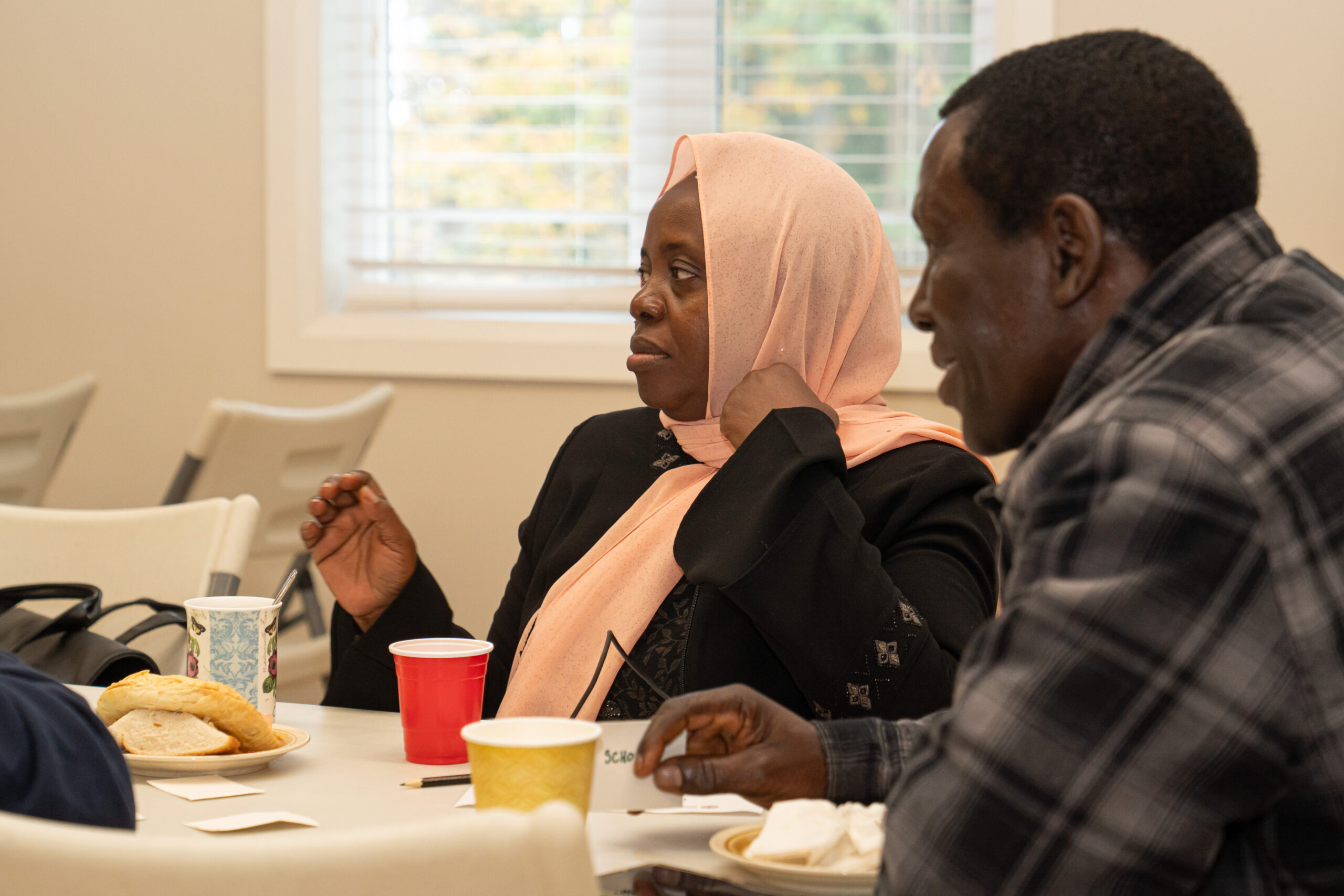
They create environments where people can speak in full sentences instead of summaries. Where stories are allowed to exist without immediate interpretation. Where listening is not simply waiting for a turn to respond.
And perhaps most importantly, circles reduce hierarchy.
In many formal environments, there is often an invisible divide between the person receiving support and the person perceived to hold expertise. Even when unintentional, this imbalance shapes how openly people speak.
But in circles, something changes.
People begin relating to one another as human beings first.
A parent speaking about the stress of rebuilding life after migration.
A young person describing the pressure of navigating identity across cultures.
Someone quietly admitting they have not felt emotionally settled for years despite appearing “fine.”
These moments are powerful because they interrupt isolation.
One of the deepest forms of distress people experience is the belief that they are alone in what they carry. Community dialogue challenges that illusion. People begin recognizing themselves in one another’s experiences.
And when that happens, shame often begins to loosen.
This does not mean circles solve structural problems on their own. They do not replace policy reform, housing access, employment pathways, or healthcare systems. Structural issues still require structural responses.
But emotional realities also require relational responses.
Human beings regulate stress, build resilience, and recover trust through connection. This is supported not only by community experience, but by decades of research in psychology, trauma studies, social health, and human development.
People heal in relationship.
Not every relationship is healthy, of course. But environments rooted in respect, listening, and psychological safety consistently produce stronger emotional outcomes than environments centered only on administration and efficiency.
And this is where many communities are beginning to rethink what support actually means.
Perhaps support is not only about delivering services.
Perhaps it is also about restoring connection.
Because underneath many modern social challenges – anxiety, polarization, isolation, burnout, mistrust – there is often a quieter issue beneath them all:
People no longer feel meaningfully connected to one another.
Community circles cannot solve everything.
But they create rare spaces where people can arrive without performance. Where emotion is not treated as inconvenience. Where silence is allowed. Where listening still matters.
In a world increasingly organized around speed, productivity, and systems, that kind of space is becoming less common — and more necessary.
Sometimes what people need first is not advice.
Sometimes they need to feel visible again.
The Writer is the Executive Director at Ontario Integration Initiative