
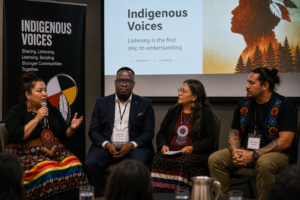
 Why Indigenous Understanding Belongs at the Centre of Newcomer Integration
Beyond Integration
OII’s Commitment to Truth & Reconciliation: Advancing Community Understanding Through ReconciliACTION
The Ontario Integration Initiative (OII) is committed to supporting meaningful Truth and Reconciliation across the communities we serve. As a nonprofit working with newcomers, youth, and families, OII recognizes that reconciliation requires active participation, accessible education, and community-led dialogue. Our work is guided by ReconciliACTION– the principle that learning must lead to concrete, accountable steps toward justice for Indigenous Peoples.
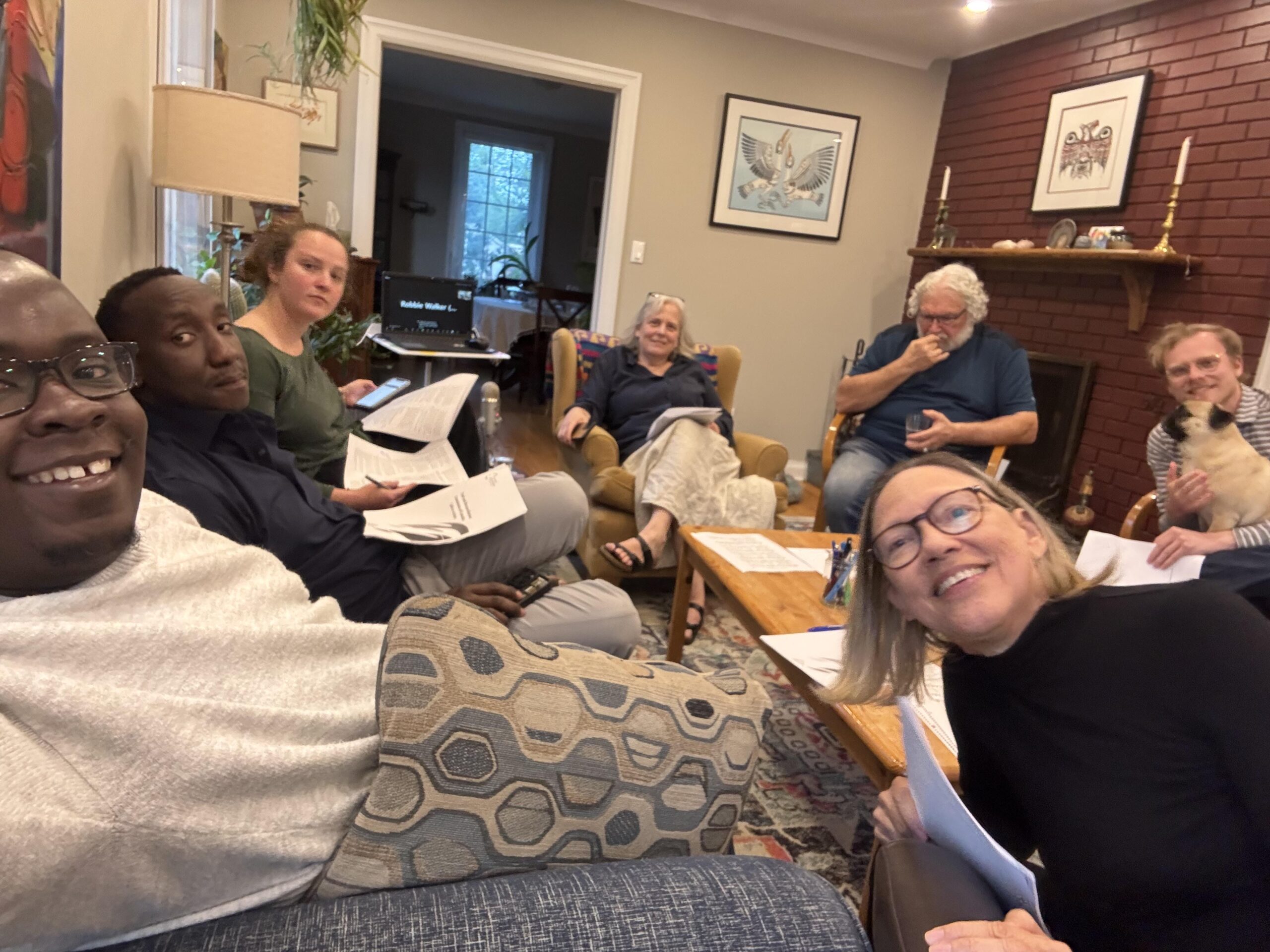
In partnership with community members at St. Philip’s, OII convened a single community learning circle focused on deepening understanding of the Truth and Reconciliation Commission (TRC), the 94 Calls to Action, and the role of both newcomers and long-time residents in reconciliation.
The session included participation from Fr. Mike, the Incumbent at St. Philip’s, who joined in his capacity as a local community partner.
Creating a Space for Open Dialogue and Shared Learning
The learning circle provided an inclusive environment where participants could discuss Canada’s history, ask questions, and reflect on how reconciliation applies to their own lives. The session aimed to:
- Introduce the history and ongoing impacts of residential schools
- Explore the structure and purpose of the 94 Calls to Action
- Discuss the concept of ReconciliACTION as a community-driven approach
- Support newcomers in understanding their role within Canada’s reconciliation process
- Identify accessible steps individuals can take to contribute meaningfully
The tone of the session focused on education, understanding, and shared responsibility, without formal ceremony or religious content.
ReconciliACTION: Moving From Awareness to Community Impact
Participants learned how ReconciliACTION connects knowledge to measurable change. Discussion focused on:
- How everyday actions contribute to reconciliation
- Ways to support Indigenous-led organizations, initiatives, and knowledge-sharing
- Concrete steps individuals, families, and community groups can take
- How nonprofits can embed reconciliation principles into their work
The circle emphasized that reconciliation involves sustained community participation, not just institutional or governmental responses.
Understanding Progress on the 94 Calls to Action
Together, the group reviewed the national status of implementing the 94 Calls to Action. This included:
- Calls that have been completed
- Areas showing partial progress
- Sectors where significant work remains
- The impact of slow or stalled progress on Indigenous communities
This grounded the conversation in real outcomes and highlighted why continued engagement from residents, nonprofits, and local partners is essential.
Key Insights From the Circle
Participants raised several important reflections:
1. Accessible Education Is Needed
Many participants shared that this was their first detailed introduction to the history and modern realities of Indigenous Peoples.
2. Newcomers Want Clear Guidance
Participants expressed a strong interest in understanding Canada’s commitments and how they can contribute respectfully.
3. Action Must Be Practical and Realistic
Community members valued examples of everyday, approachable actions-such as learning from Indigenous sources, participating in community events, supporting Indigenous businesses, or advocating for policy change.
4. Partnership Supports Stronger Community Engagement
The collaboration with St. Philip’s and the participation of local leaders helped create a comfortable, community-focused environment for discussion.
OII’s Long-Term Commitment
This learning circle is one element of OII’s broader commitment to embedding reconciliation principles within our programming and organizational practices. Moving forward, OII will continue to:
- Integrate reconciliation education across newcomer, youth, and community programs
- Build relationships with Indigenous educators, advisors, and organizations
- Facilitate additional learning opportunities in communities across Ontario
- Strengthen our internal policies to reflect reconciliation and equity principles
OII remains dedicated to fostering informed, engaged communities that contribute to a more just and equitable future for Indigenous Peoples.